Alaskan Brewing Company – One of the Best US Breweries


The Alaskan Brewing Company is recognized as the oldest brewery in Alaska that is still in operation, with the amber beer as the most well known brand. The company produces two more brands, which are the Alaskan frontier amber and the pale ale. Indeed, if amber beer is what you enjoy, then you should go for Alaskan Brewing Co.

As many know, to brew beer in the state of Alaska is difficult and taxing. The fact is that the Juneau coastal community does not enjoy road connection to the rest of the US states. This means everything goes in and out either by air or water.

In the year 1986, Alaskan Brewing Company became the 67 brewery operation in the US and the sole company in Alaska. Ever since, it received numerous awards and medals of distinctions, which include the best beer award in the Great American Beer Festival in 1988.

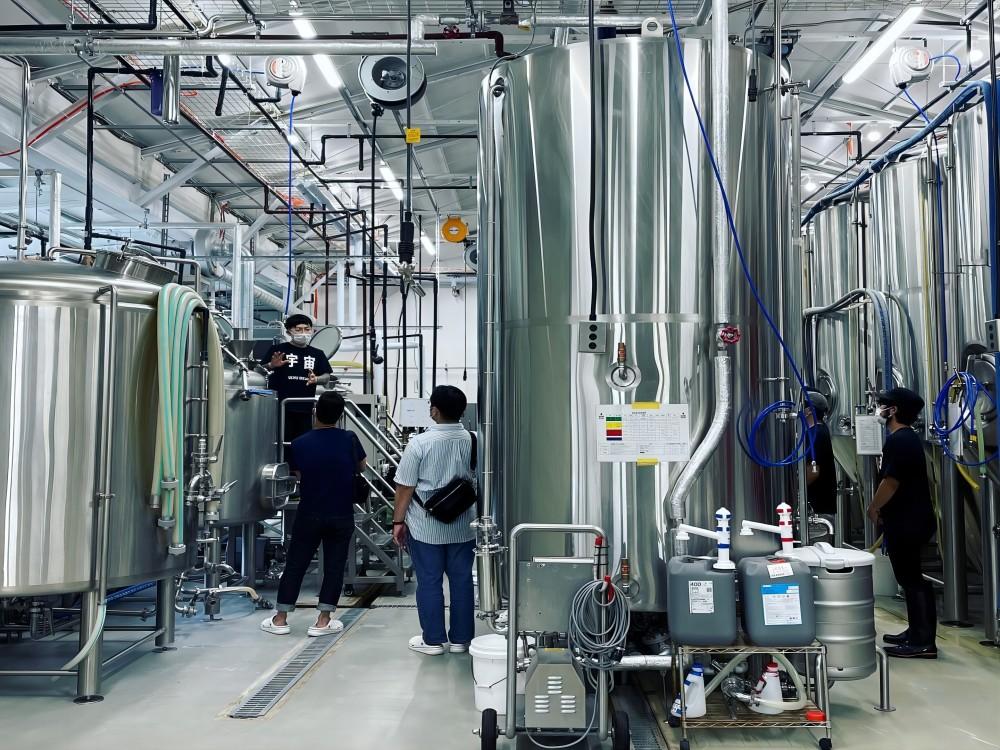
The popularity of company’s beer products made it work harder to meet the growing demand of its patrons and customers. They hold the record, albeit unofficial, for ten barrel brewing system production, which yields more than 40 batches every week.

The Alaskan Brewing Company offers different brew styles, which are the following:

The Amber beer is recognized as the flagship beer. It is based from a recipe from the turn of the century Gold Rush era. You can certainly enjoy its malty, smooth and rich taste.

Alaskan pale ale beer is crisp, fresh and certainly inviting. It is great with salads, as well as prawns and crabs. The hops’ floral aroma comes from dry hopping of the production tanks during fermentation process.

Stout beer is an oatmeal style which does not possess the harshness that other stouts have. You can have it with meals or even chocolates.

Alaskan smoked porter is considered world class because of its excellent quality as a beer. It is brewed during the fall season and ideally stored in cellars to be enjoyed in future beer drinking requirements.
Image credit: wise

Beer Brewing Process – Painstaking Stages of Fermentation


The beer brewing process, the actual making of beer via fermentation has a long and great history as it was actually been practiced in old Egypt. Descriptions of recipes on beer can be read in ancient Sumerian documents.

Complex as it is, the beer brewing process , or even beer lagering, has many basic stages, each one important in the creation of a good quality beer.

Mashing is the first phase of the beer brewing process, wherein the malt are crushed and then soaked up in water; this helps create malt extract. The mash is held at a constant degree of temperature enough for starches to convert to fermentable sugar.

Sparging is when one filters the water though the mash in order for sugar to dissolve. The dark sugary liquid is called the wort.

Boiling is the third part of the beer brewing process, wherein the wort is brought to a boil with the other ingredients. This process removes excess liquid or water and destroys all types of microbes. Whole or extract hops are added in during the boiling stage.

Fermentation is when the yeast is put in, after which the beer is left for a specific period of time. After it undergoes fermentation, the beer might undergo this stage again in order for yeast and other matter to really settle.

Packaging is the last state of the beer brewing process. Here, the beer now has alcohol but not enough carbon dioxide. There are several options on which to increase carbon dioxide level. The most widely used option is the force carbonation, wherein the gas is directly added to the bottle or beer keg.
After a long beer brewing process, we now have a quality finished alcoholic product that needs to be bottled, casked, canned or kegged. Beers yet to be filtered may be subjected to storage in casks, tanks or bother for further fermenting and smoothing of hops or harsh alcohol.
Image credit: smohundro

Microbrewery for Sale – Going for a Profitable Business

You are surely also hooked on microbrew beer, especially those exotic and unique tasting southern microbrews that are popular all over the United States. So you think it is about time that you not only consume these great brews, but learn about beer brewing process, draw up a microbrewery business plan and profit on them. But if you are one who is lacking time to build a business from scratch, then why not consider a microbrewery for sale?


We love microbrews. And of course, it is a nice idea to have a beer with our own label and name. It certainly is a great and surely profitable idea. If you want a microbrewery business plan that is sure to be 100 percent to be realized without hitch, then it is best to go and find an already existing microbrewery for sale.

Many of us microbrews lovers indeed have set their sites on finding microbrewery for sale, wanting to purchase one and work hard on it to have a successful business.

If you are one that is inclined to build on this type of business, you can simply go online for many microbrewery business plans that can be found on the internet. Likewise, there are many online sites that offer profitable microbrewery for sale. Of course, if you want to learn more about the ins and outs of brews and beer and microbrewery system in general, the internet is where you can find a wealth of valuable information.

It must be noted however that there are laws that need to be considered. Alcohol and its control vary from one state to another. It is best therefore to familiarize yourself with the business regulations as well as the laws that pertain to microbrewery business, especially the laws on the US state that you in.
Image credit: lindabutterfly

Microbrews Home Brewing Instructions

The standard microbrews home brewing instructions, which if followed to the letter, will help you in creating your own brew. The usual home brewed beer is created by mixing and boiling malt extract, hops and water in a large pot. The wort will then have to be cooled and yeast is added to initiate the process of fermentation.


To continue with the home brewing instructions that you need to follow for a successful homebrewing, the wort is boiled for around 15 minutes; the maximum boiling time is one hour. Boiling the wort helps in the removal of the impurities, dissolving of the hop character and the breaking down of the sugar. The mixture is then cooled to settle to pitching temperature.

Next home brewing instructions is to have the cooled wort poured to the fermenter in an aggressive manner. This is done in order to aerate your wort. Sufficient amount of oxygen is needed for the growth period of the yeast, which is then added to the wort mixture.

The initial process of fermentation takes place on a carboy or big bucket. You may left it open however should be stoppered with Carbon dioxide that is created by venting via a fermenting lock.

The microbrews home brewing instructions usually require great amount of time, albeit in due time, you will be able to make some short cuts especially if you have mastered the process. On the other hand, if you are a first timer in microbrewing, it is best to simply following the traditional home brewing process to assure the creation of quality microbrews.

Home Brewing kits are available in the market, and one of the most popular is the Mr Beer Microbrewery. The company produces kits system that will help you produce your own home brewed beer, cider as well as your very own root beer.
Image credit: Kables

Microbrew Equipment – Various Microbrewery Tools

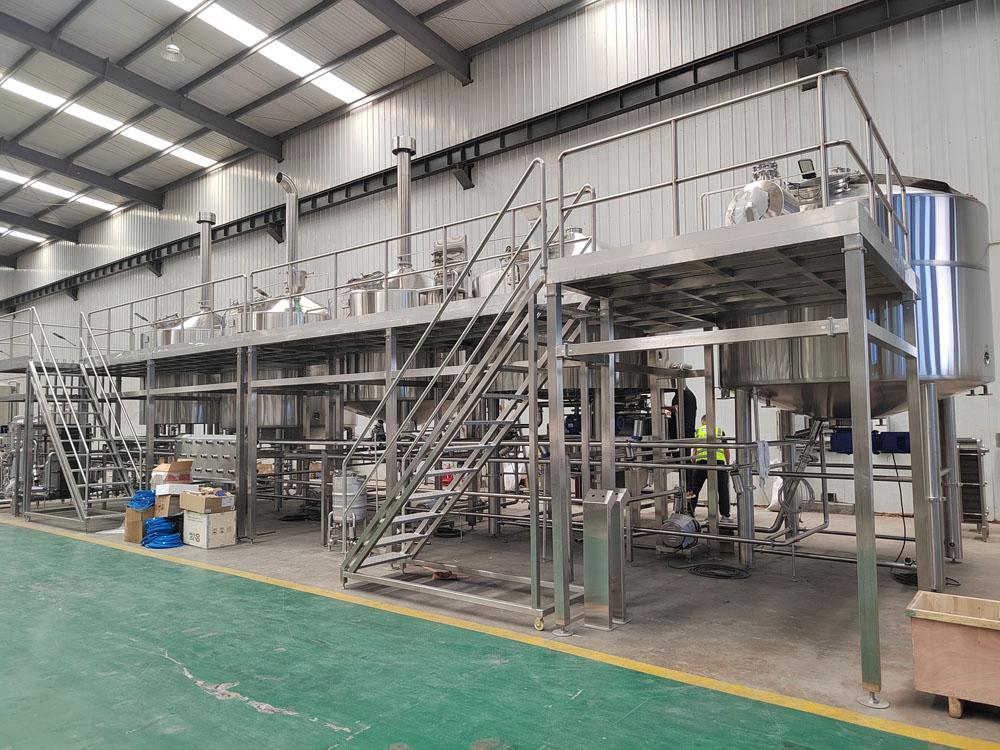
Before one can begin his beer brewing, you will have to be ready with your microbrew equipment. Especially if you are a first timer, your equipment and tools must be simple, quite small and even home like in contrast to those complicated brews and beer equipment of large US breweries such as the Alaskan Brewing Company. First of all, what we need is a brew pot, which you should check if you already have one before even buying.

The brew pot must hold some 3 to 4 gallons of beer. Another microbrew equipment that is a must is fermenter. On the average, for a batch of five gallons, your fermenter must be able to hold at least six gallons in order to allow foam formation during the fermentation process.


For this particular process, you will need to utilize a carboy or plastic bucket. The fermenter must have an airlock that will permit Co2 to escape and at the same time preventing air from coming it. Siphon hose should be ready for the transfer of beer when ready, without any mixed air on the liquid.

Bottling bucket is an important microbrew equipment as it makes the microbrewery process easier. Bottling bucket is much like a fermenter, albeit the former possess a spigor underneath which permits for bottles to be directly filled. Therefore bottling buckets are effective in making for a much less messy system. Cappers are likewise needed for bottle sealing. Remember that bottles for beers and caps or a big keg are necessary for the brew storage.

Online is where you can feed microbrewery kit that has everything that you will need for brewing. These kits are available on the net, and have all the excellent microbrewery equipment that you will need for your brewing activities.

Should you decide that you do not need a microbrewery kit, then you will have to purchase the microbrew equipment separately. This will certainly cost you more than if you buy one kit, albeit the advantage is that you can buy only what you need.

Once you are able to complete all your microbrewery equipment, of course, you must be adept in the use of such equipment before you get your operation started in order to prevent any problem from happening during the process. Usually the equipment are simple and easy to operate, hence you will not encounter any problem.

Microbrewery system is an exciting process, more so if you begin creating your own beer. Now you have the means to create your own brew and enjoy it with your family members and close friends.
Image credit: Ed from Ohio