
Professional Anti-Corrosion Solutions for Seaside Breweries
- Dec 13, 2025
- 118
- tiantai
As craft beer and commercial breweries continue to expand worldwide, more brewery equipment is being installed in coastal and seaside locations. While these locations offer logistical and commercial advantages, they also expose chillers, cooling systems, and beer brewing equipment to harsh environmental conditions such as high humidity, salt spray, and elevated temperatures.
Without proper anti-corrosion treatment, equipment installed near the sea may suffer from rust, coating failure, electrical faults, reduced cooling efficiency, and shortened service life. For this reason, corrosion protection is not an option—it is a necessity for any seaside brewery.
Challenges of Coastal Environments for Brewery Equipment
Compared with inland breweries, coastal breweries typically face:
**High salt content in the air, accelerating metal corrosion
**Constant humidity, increasing the risk of electrical and motor damage
**Strong temperature variations, causing coating fatigue
**Outdoor or semi-outdoor installation of chillers and cooling units
Among all systems, industrial chillers, glycol cooling units, fermenters, piping, and outdoor condensers are the most vulnerable components.
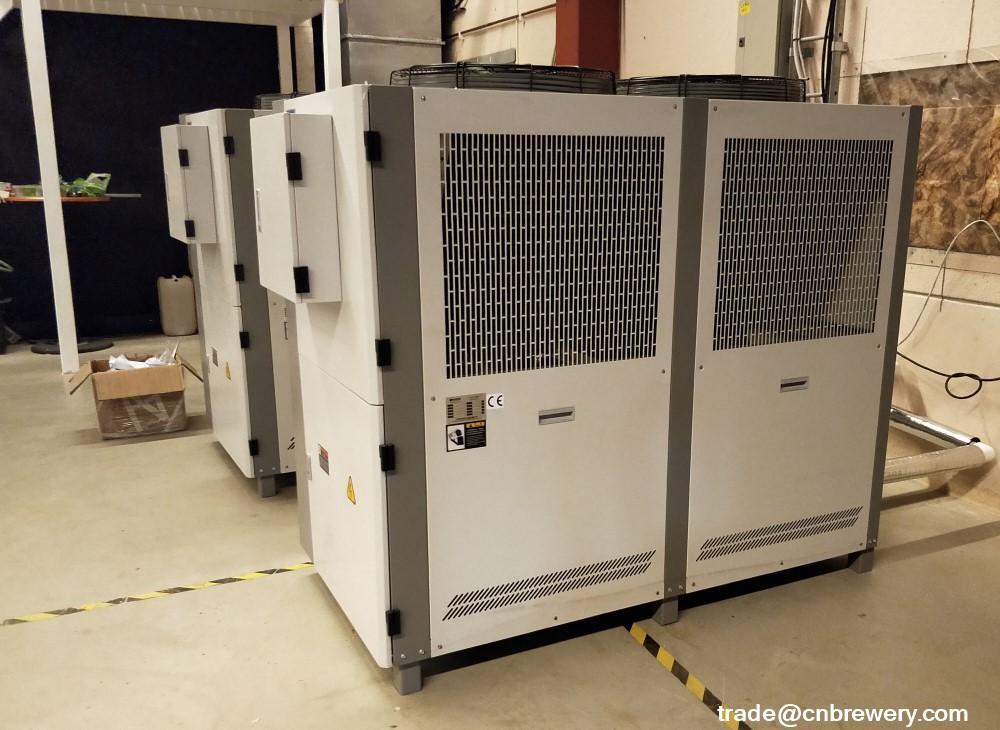
Anti-Corrosion Solutions for Chillers and Brewery Equipment
A reliable brewery equipment supplier should provide multi-level corrosion protection, combining material selection, surface treatment, and structural design.
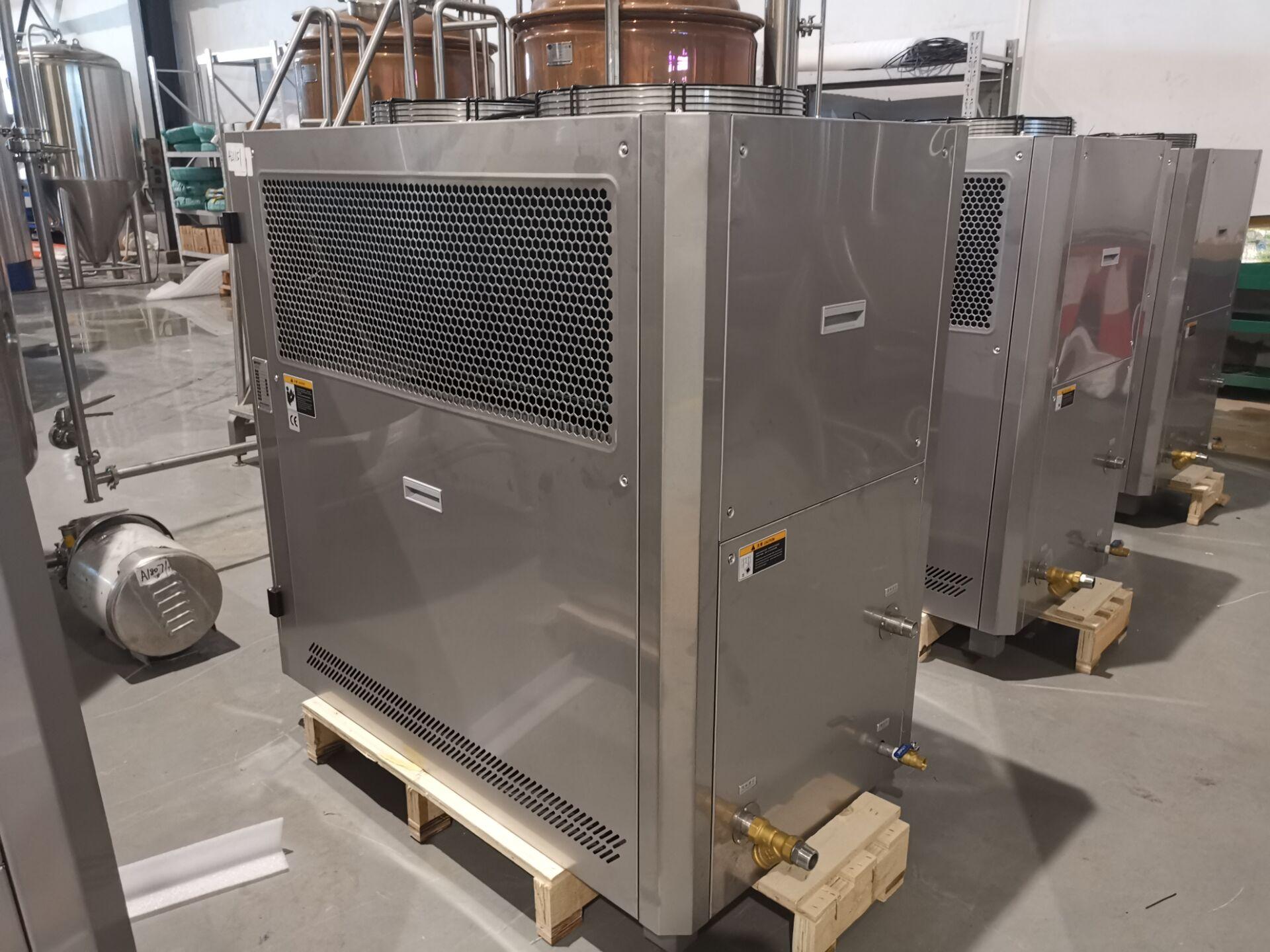
1. Stainless Steel Options for Coastal Use
304 stainless steel housings for standard coastal conditions
316 stainless steel for high-salinity or harsh seaside environments
Stainless steel is widely used for brewhouses, fermentation tanks, bright beer tanks, and selected external components
Upgrading exposed parts to stainless steel significantly improves corrosion resistance and long-term reliability.
2. Heavy-Duty Coating for Carbon Steel Structures
Some components, such as chiller bases, frames, and structural supports, are usually made of carbon steel. For seaside applications, these parts can be protected by:
Hot-dip galvanizing
Epoxy zinc-rich primer + polyurethane topcoat
Marine-grade coating systems (C4 / C5 corrosion class)
These treatments greatly extend the service life of brewery chillers and outdoor equipment.
3. Anti-Corrosion Protection for Fans and Heat Exchangers
Air-cooled chillers are particularly exposed in coastal areas:
Anti-corrosion coated fan blades or special alloy materials
Epoxy-coated aluminum condenser fins
Optional protective covers to reduce direct salt spray exposure
Such configurations are highly recommended for brewery cooling systems and glycol chillers installed near the sea.
4. Electrical Protection and Structural Details
Small design details make a big difference in corrosive environments:
IP54 / IP65 rated electrical control panels
Sealed cable entries and moisture-resistant wiring
Stainless steel fasteners and bolts
Proper drainage design to avoid water accumulation
These measures ensure stable operation of brewery equipment in humid and salty conditions.

Why Anti-Corrosion Design Matters for Seaside Breweries
Investing in proper corrosion protection for brewery equipment and chillers results in:
**Longer equipment lifespan
**Lower maintenance and downtime
**Stable cooling performance
**Improved safety and operational reliability
For breweries located near the sea, customized anti-corrosion solutions are far more effective than standard configurations.
Conclusion
Whether you are planning a new brewery or upgrading an existing facility in a coastal area, selecting the right brewery equipment with professional anti-corrosion treatment is essential. A well-designed chiller and brewing system can operate reliably for many years—even in hot, humid, and salty seaside environments.
Are you planning to set up a brewery where close to the sea? Contact Nicole to get a complete solution for coastal brewery system and anti-corrosion treatment!
Email: [email protected]
Sales manager of Tiantai beer equipment co
Without proper anti-corrosion treatment, equipment installed near the sea may suffer from rust, coating failure, electrical faults, reduced cooling efficiency, and shortened service life. For this reason, corrosion protection is not an option—it is a necessity for any seaside brewery.
Challenges of Coastal Environments for Brewery Equipment
Compared with inland breweries, coastal breweries typically face:
**High salt content in the air, accelerating metal corrosion
**Constant humidity, increasing the risk of electrical and motor damage
**Strong temperature variations, causing coating fatigue
**Outdoor or semi-outdoor installation of chillers and cooling units
Among all systems, industrial chillers, glycol cooling units, fermenters, piping, and outdoor condensers are the most vulnerable components.
Anti-Corrosion Solutions for Chillers and Brewery Equipment
A reliable brewery equipment supplier should provide multi-level corrosion protection, combining material selection, surface treatment, and structural design.
1. Stainless Steel Options for Coastal Use
304 stainless steel housings for standard coastal conditions
316 stainless steel for high-salinity or harsh seaside environments
Stainless steel is widely used for brewhouses, fermentation tanks, bright beer tanks, and selected external components
Upgrading exposed parts to stainless steel significantly improves corrosion resistance and long-term reliability.
2. Heavy-Duty Coating for Carbon Steel Structures
Some components, such as chiller bases, frames, and structural supports, are usually made of carbon steel. For seaside applications, these parts can be protected by:
Hot-dip galvanizing
Epoxy zinc-rich primer + polyurethane topcoat
Marine-grade coating systems (C4 / C5 corrosion class)
These treatments greatly extend the service life of brewery chillers and outdoor equipment.
3. Anti-Corrosion Protection for Fans and Heat Exchangers
Air-cooled chillers are particularly exposed in coastal areas:
Anti-corrosion coated fan blades or special alloy materials
Epoxy-coated aluminum condenser fins
Optional protective covers to reduce direct salt spray exposure
Such configurations are highly recommended for brewery cooling systems and glycol chillers installed near the sea.
4. Electrical Protection and Structural Details
Small design details make a big difference in corrosive environments:
IP54 / IP65 rated electrical control panels
Sealed cable entries and moisture-resistant wiring
Stainless steel fasteners and bolts
Proper drainage design to avoid water accumulation
These measures ensure stable operation of brewery equipment in humid and salty conditions.
Why Anti-Corrosion Design Matters for Seaside Breweries
Investing in proper corrosion protection for brewery equipment and chillers results in:
**Longer equipment lifespan
**Lower maintenance and downtime
**Stable cooling performance
**Improved safety and operational reliability
For breweries located near the sea, customized anti-corrosion solutions are far more effective than standard configurations.
Conclusion
Whether you are planning a new brewery or upgrading an existing facility in a coastal area, selecting the right brewery equipment with professional anti-corrosion treatment is essential. A well-designed chiller and brewing system can operate reliably for many years—even in hot, humid, and salty seaside environments.
Are you planning to set up a brewery where close to the sea? Contact Nicole to get a complete solution for coastal brewery system and anti-corrosion treatment!
Email: [email protected]
Sales manager of Tiantai beer equipment co

.jpg)
