
Why a Combined Three-Vessel Brewhouse Can Operate Without a Dedicated HLT
- Dec 22, 2025
- 61
- tiantai
In traditional brewhouse designs, a Hot Liquor Tank (HLT) is typically used to store and supply hot water for mashing, sparging, and CIP.
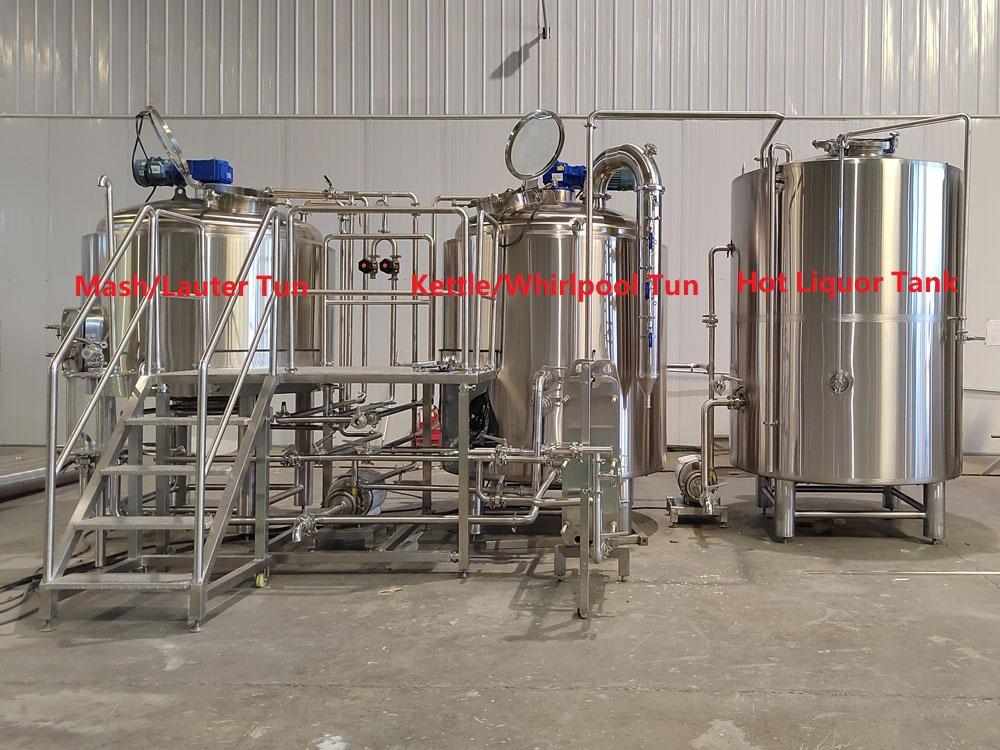
However, in Tiantai’s three-vessel combined brewhouse configuration, a separate HLT is not a technical necessity.
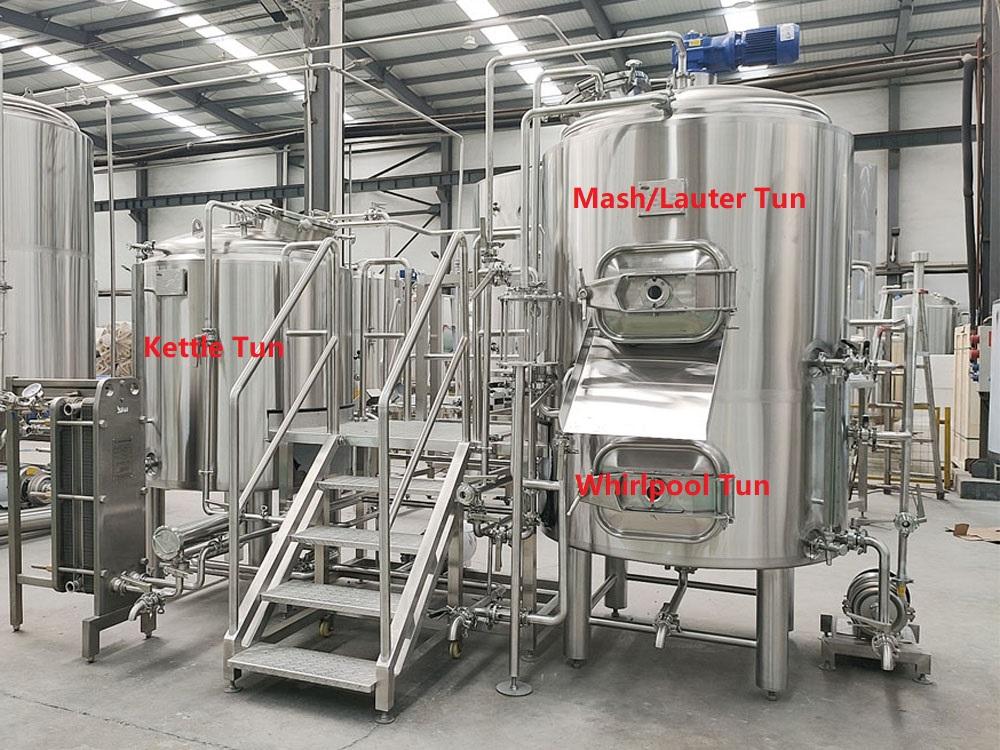
By intelligently combining vessel functions and optimizing the brewhouse layout, hot water demand can be fully covered by the Kettle Tun and Whirlpool Tun, eliminating the need for an independent HLT.
Functional Overlap: The Key to Removing the HLT
In this three-vessel setup, the system consists of:
* Stacked Mash/Lauter Tun and Whirlpool Tun (Upper is Mash/Lauter Tun and Lower is Whirlpool Tun)
* Kettle Tun
Unlike conventional layouts where each vessel has a single fixed role, this configuration is designed so that the Kettle Tun and Whirlpool Tun can temporarily function as hot water vessels when needed.
Since hot water is required mainly during specific stages (sparging and CIP), rather than continuously, these vessels can efficiently take on the hot water role without affecting the brewing sequence.
Hot Water Generation Using the Kettle Tun
The Kettle Tun is already equipped with high-capacity heating (electric or steam).
When not actively boiling wort, it can be used to:
* Heat sparge water
* Supply hot water for lautering
* Prepare hot water for CIP
This means hot water is produced on demand, rather than stored long-term in a dedicated HLT, reducing heat loss and equipment redundancy.
Whirlpool Tun as a Temporary Hot Water or Wort Buffer
The Whirlpool Tun plays a critical supporting role in removing the need for an HLT.
Depending on process preference, it can function as:
* A temporary wort holding vessel during lautering
* A hot water buffer for sparging water
* A hot water vessel for CIP preparation
Because the Whirlpool Tun is already part of the standard three-vessel system, assigning it a secondary hot water role allows the brewhouse to remain compact and efficient without adding extra tanks.
Lautering & Sparging Without a Dedicated HLT
With this vessel combination, sparging can be achieved in different ways, all without an HLT:
* Hot water is heated in the Kettle Tun
* Hot water is either supplied directly for sparging or temporarily stored in the Whirlpool Tun
* Wort transfer is handled via gravity (in stacked layouts) or via a wort grant, depending on design preference
In all cases, the system maintains:
* Stable lautering
* Precise temperature control
* Gentle wort handling
without requiring a standalone hot liquor tank.
Engineering Advantages of an HLT-Free Design
Removing the HLT provides several practical benefits:
* Lower initial investment
* Reduced floor space and building height requirements
* Fewer vessels, valves, and pipelines
* Lower heat loss from long-term hot water storage
* Simplified brewhouse operation and maintenance
For nano breweries, brewpubs, and space-limited projects, these advantages are often more valuable than having a dedicated HLT.
Designed for Real Brewing, Not Redundant Equipment
Tiantai’s three-vessel combined brewhouse is engineered around actual brewing needs and timing, rather than traditional but sometimes redundant layouts.
By allowing vessels to share functions intelligently, the system achieves:
* High efficiency
* Compact design
* Professional brewing performance
all while safely and reliably operating without a dedicated Hot Liquor Tank.
However, in Tiantai’s three-vessel combined brewhouse configuration, a separate HLT is not a technical necessity.
By intelligently combining vessel functions and optimizing the brewhouse layout, hot water demand can be fully covered by the Kettle Tun and Whirlpool Tun, eliminating the need for an independent HLT.
Functional Overlap: The Key to Removing the HLT
In this three-vessel setup, the system consists of:
* Stacked Mash/Lauter Tun and Whirlpool Tun (Upper is Mash/Lauter Tun and Lower is Whirlpool Tun)
* Kettle Tun
Unlike conventional layouts where each vessel has a single fixed role, this configuration is designed so that the Kettle Tun and Whirlpool Tun can temporarily function as hot water vessels when needed.
Since hot water is required mainly during specific stages (sparging and CIP), rather than continuously, these vessels can efficiently take on the hot water role without affecting the brewing sequence.
Hot Water Generation Using the Kettle Tun
The Kettle Tun is already equipped with high-capacity heating (electric or steam).
When not actively boiling wort, it can be used to:
* Heat sparge water
* Supply hot water for lautering
* Prepare hot water for CIP
This means hot water is produced on demand, rather than stored long-term in a dedicated HLT, reducing heat loss and equipment redundancy.
Whirlpool Tun as a Temporary Hot Water or Wort Buffer
The Whirlpool Tun plays a critical supporting role in removing the need for an HLT.
Depending on process preference, it can function as:
* A temporary wort holding vessel during lautering
* A hot water buffer for sparging water
* A hot water vessel for CIP preparation
Because the Whirlpool Tun is already part of the standard three-vessel system, assigning it a secondary hot water role allows the brewhouse to remain compact and efficient without adding extra tanks.
Lautering & Sparging Without a Dedicated HLT
With this vessel combination, sparging can be achieved in different ways, all without an HLT:
* Hot water is heated in the Kettle Tun
* Hot water is either supplied directly for sparging or temporarily stored in the Whirlpool Tun
* Wort transfer is handled via gravity (in stacked layouts) or via a wort grant, depending on design preference
In all cases, the system maintains:
* Stable lautering
* Precise temperature control
* Gentle wort handling
without requiring a standalone hot liquor tank.
Engineering Advantages of an HLT-Free Design
Removing the HLT provides several practical benefits:
* Lower initial investment
* Reduced floor space and building height requirements
* Fewer vessels, valves, and pipelines
* Lower heat loss from long-term hot water storage
* Simplified brewhouse operation and maintenance
For nano breweries, brewpubs, and space-limited projects, these advantages are often more valuable than having a dedicated HLT.
Designed for Real Brewing, Not Redundant Equipment
Tiantai’s three-vessel combined brewhouse is engineered around actual brewing needs and timing, rather than traditional but sometimes redundant layouts.
By allowing vessels to share functions intelligently, the system achieves:
* High efficiency
* Compact design
* Professional brewing performance
all while safely and reliably operating without a dedicated Hot Liquor Tank.

.jpg)
