
Pot Still vs. Column Still
- Jan 13, 2026
- 153
- tiantai
Pot Still vs. Column Still: Structural Differences and Complete Distillery Solutions by Tiantai Brewtech
In the spirits distillation industry, Pot Stills and Column Stills represent two fundamental distillation structures, each offering distinct advantages in terms of spirit character, alcohol purity, and production consistency. While both distillation systems are designed to separate alcohol from fermented wash, their structural principles and performance outcomes differ significantly. Understanding these differences is essential when designing an efficient and future-proof distillery.
At Tiantai Brewtech, we go beyond supplying individual stills. We provide complete, integrated distillation solutions, covering every stage of production—from raw material preparation to final bottling.
1. Pot Still: Flavor-Driven Distillation Structure
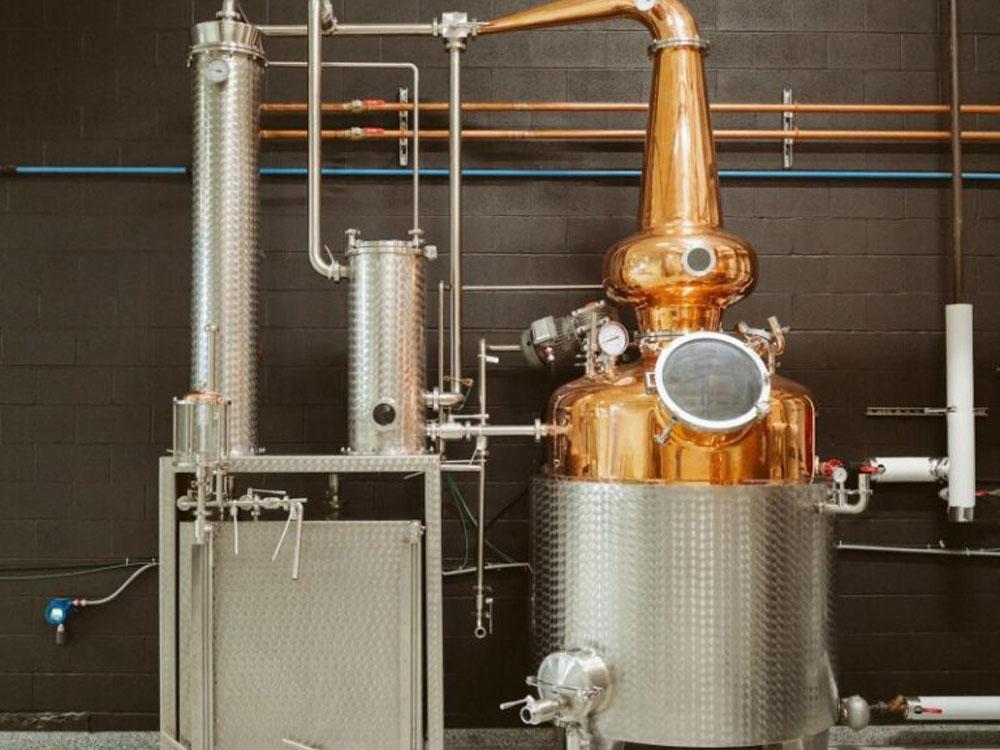
A Pot Still is built around a kettle-style vessel, typically consisting of a pot body, a head or lyne arm, and a condenser. Its relatively simple vapor path allows a greater portion of natural congeners and aromatic compounds to be retained, resulting in spirits with rich character and depth.
Structural and Performance Characteristics:
* Simple and traditional vessel structure
* Moderate alcohol strength output
* High retention of esters and flavor compounds
* Widely manufactured in copper to remove sulfur compounds and enhance aroma
Typical Spirit Applications:
* Whisky (especially single malt)
* Brandy and Cognac
* Rum
* Brandy/Fruit spirits
Advantages:
* Produces complex, full-bodied spirits
* Strong connection to traditional craftsmanship and brand storytelling
* Ideal for premium and craft spirit production
Considerations:
* Limited rectification capability
* Product consistency depends heavily on process control and operator experience
2. Column Still: High Purity and Process Stability
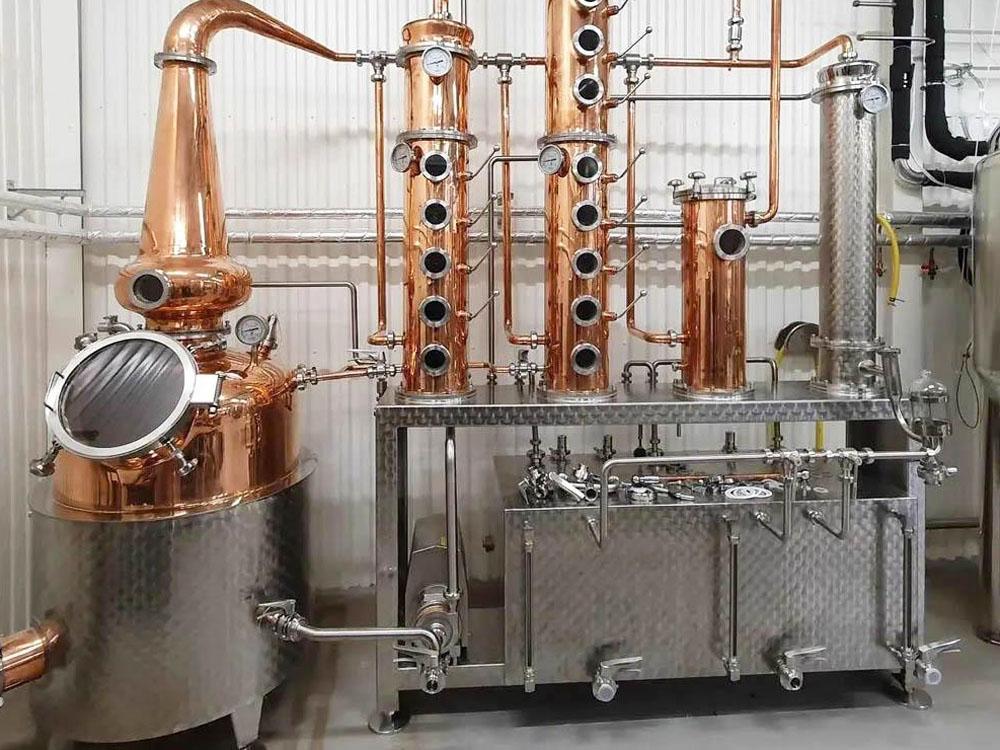
A Column Still features a vertical tower structure equipped with multiple trays or high-efficiency packing. Through multi-stage vapor–liquid interaction, alcohol is refined step by step, enabling high separation efficiency and stable spirit quality.
Structural and Performance Characteristics:
* Multi-stage rectification structure with high theoretical plates
* Capable of producing high-purity alcohol up to 90–96% ABV
* Adjustable flavor control through tray configuration and reflux management
* Excellent product consistency and operational stability
* Energy-efficient design with optimized heat utilization
* Modular configuration for rectification, heads concentration, or impurity removal
Typical Spirit Applications:
* Vodka
* Neutral alcohol
* Gin base spirits
* Highly rectified spirits
Advantages:
* Clean, smooth spirit profile
* High consistency between production runs
* Suitable for standardized and scalable production
Considerations:
* More complex structure and control system
* Flavor expression is more restrained compared to pot stills
3. Pot Still vs. Column Still: Key Differences at a Glance
4. Hybrid Stills: Balancing Flavor and Purity
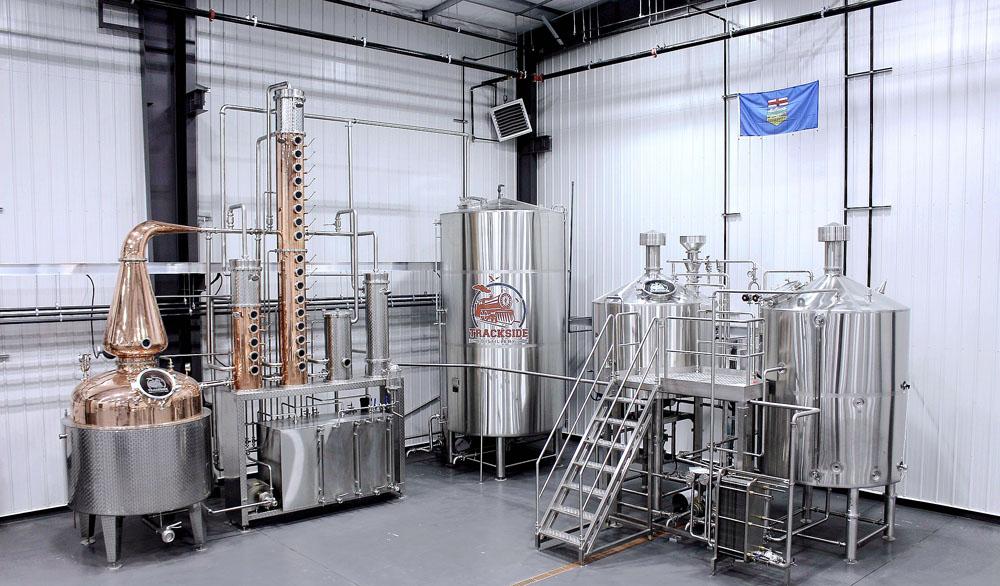
Many modern distilleries choose Hybrid Stills, which combine a traditional pot still base with an integrated rectification column. This configuration allows distillers to fine-tune the balance between flavor retention and alcohol purity, enabling a single system to produce multiple spirit styles with maximum flexibility.
5. More Than a Still: Tiantai Brewtech’s Complete Distillation Line
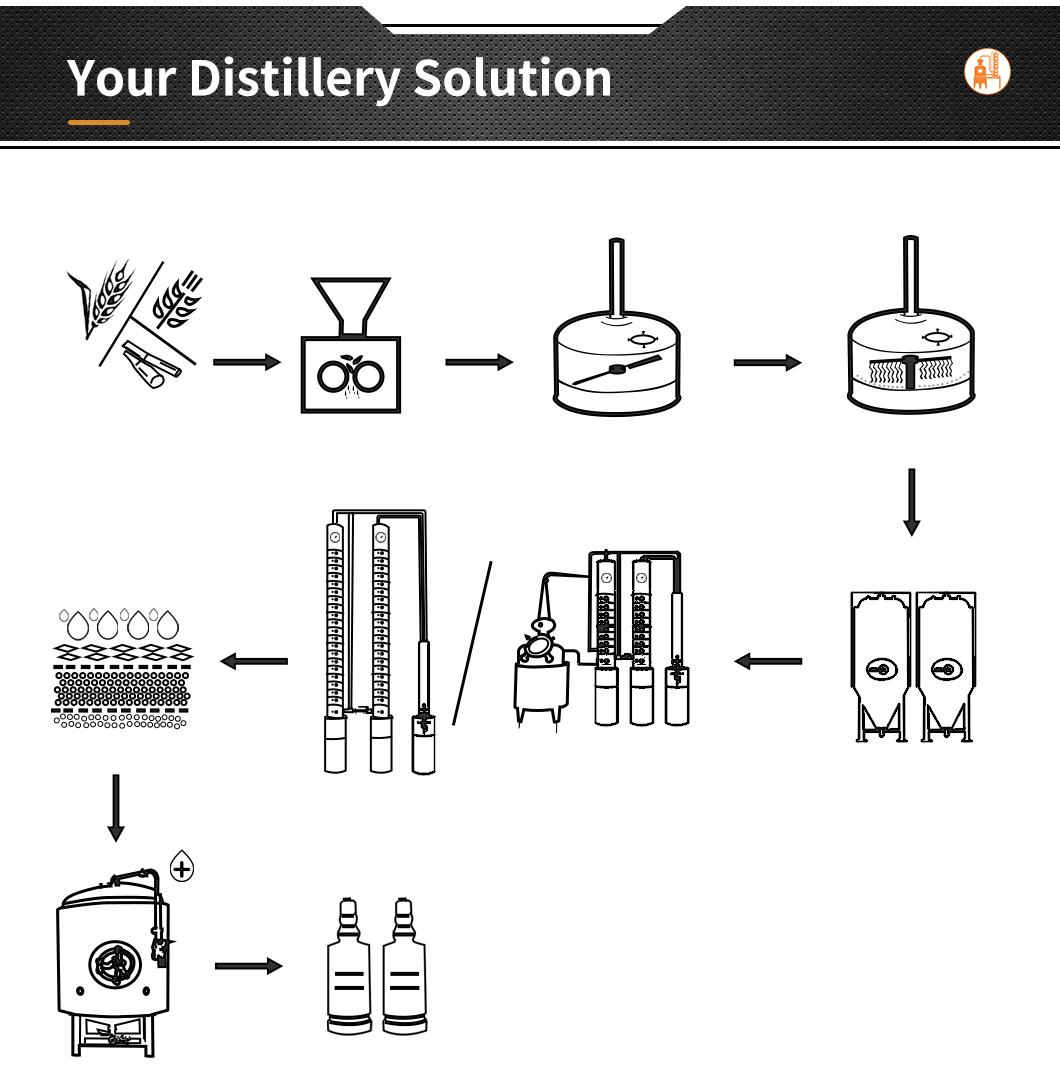
At Tiantai Brewtech, we understand that a high-quality still is only one part of a successful distillery. That is why we provide complete turnkey distillation systems, including:
Upstream Systems (Before Distillation):
* Grain and malt milling systems
* Mashing and saccharification systems
* Lautering and filtration equipment
* Temperature-controlled fermentation tanks
Distillation Systems:
* Pot stills, column stills, and hybrid stills
* Copper and stainless steel configurations
* Custom heating methods and automation levels
Downstream Systems (After Distillation):
* Spirit storage and buffer tanks
* Aging and maturation solutions
* Filtration and blending systems
* Bottling, capping, and packaging lines
Auxiliary Systems:
* Glycol Chilling System
* CIP System
* Steam Supply Syste,
* Hot Water and Cold Water Supply System
* Water Treatment System
......
All systems are engineered to work seamlessly together, ensuring stable operation, consistent product quality, and efficient use of space and energy.
6. Choosing the Right Solution
Selecting the right distillation structure depends on your target spirit style, desired alcohol purity, production capacity, and long-term business goals. Whether you are launching a craft distillery or expanding an established operation, Tiantai Brewtech provides custom-engineered solutions tailored to your specific requirements.
Pot Stills and Column Stills represent two different philosophies of spirit production—character-driven distillation versus purity-driven refinement. With Tiantai Brewtech, you don’t need to choose between equipment suppliers. We deliver complete, integrated distillery solutions, supporting your project from raw material processing to finished bottled spirits.
Edited by Vicky
Sales manager in Tiantai Brewtech
Email: [email protected]
In the spirits distillation industry, Pot Stills and Column Stills represent two fundamental distillation structures, each offering distinct advantages in terms of spirit character, alcohol purity, and production consistency. While both distillation systems are designed to separate alcohol from fermented wash, their structural principles and performance outcomes differ significantly. Understanding these differences is essential when designing an efficient and future-proof distillery.
At Tiantai Brewtech, we go beyond supplying individual stills. We provide complete, integrated distillation solutions, covering every stage of production—from raw material preparation to final bottling.
1. Pot Still: Flavor-Driven Distillation Structure
A Pot Still is built around a kettle-style vessel, typically consisting of a pot body, a head or lyne arm, and a condenser. Its relatively simple vapor path allows a greater portion of natural congeners and aromatic compounds to be retained, resulting in spirits with rich character and depth.
Structural and Performance Characteristics:
* Simple and traditional vessel structure
* Moderate alcohol strength output
* High retention of esters and flavor compounds
* Widely manufactured in copper to remove sulfur compounds and enhance aroma
Typical Spirit Applications:
* Whisky (especially single malt)
* Brandy and Cognac
* Rum
* Brandy/Fruit spirits
Advantages:
* Produces complex, full-bodied spirits
* Strong connection to traditional craftsmanship and brand storytelling
* Ideal for premium and craft spirit production
Considerations:
* Limited rectification capability
* Product consistency depends heavily on process control and operator experience
2. Column Still: High Purity and Process Stability
A Column Still features a vertical tower structure equipped with multiple trays or high-efficiency packing. Through multi-stage vapor–liquid interaction, alcohol is refined step by step, enabling high separation efficiency and stable spirit quality.
Structural and Performance Characteristics:
* Multi-stage rectification structure with high theoretical plates
* Capable of producing high-purity alcohol up to 90–96% ABV
* Adjustable flavor control through tray configuration and reflux management
* Excellent product consistency and operational stability
* Energy-efficient design with optimized heat utilization
* Modular configuration for rectification, heads concentration, or impurity removal
Typical Spirit Applications:
* Vodka
* Neutral alcohol
* Gin base spirits
* Highly rectified spirits
Advantages:
* Clean, smooth spirit profile
* High consistency between production runs
* Suitable for standardized and scalable production
Considerations:
* More complex structure and control system
* Flavor expression is more restrained compared to pot stills
3. Pot Still vs. Column Still: Key Differences at a Glance
| Aspect | Pot Still | Column Still |
| Core Structure | Kettle vessel with vapor arm | Vertical column with trays or packing |
| Alcohol Purity | Medium | High |
| Flavor Expression | Rich and complex | Clean and neutral |
| Separation Precision | Moderate | High |
| Product Consistency | Operator-dependent | Highly stable |
| Typical Spirits | Whisky, Brandy, Rum | Vodka, Neutral Spirits |
4. Hybrid Stills: Balancing Flavor and Purity
Many modern distilleries choose Hybrid Stills, which combine a traditional pot still base with an integrated rectification column. This configuration allows distillers to fine-tune the balance between flavor retention and alcohol purity, enabling a single system to produce multiple spirit styles with maximum flexibility.
5. More Than a Still: Tiantai Brewtech’s Complete Distillation Line
At Tiantai Brewtech, we understand that a high-quality still is only one part of a successful distillery. That is why we provide complete turnkey distillation systems, including:
Upstream Systems (Before Distillation):
* Grain and malt milling systems
* Mashing and saccharification systems
* Lautering and filtration equipment
* Temperature-controlled fermentation tanks
Distillation Systems:
* Pot stills, column stills, and hybrid stills
* Copper and stainless steel configurations
* Custom heating methods and automation levels
Downstream Systems (After Distillation):
* Spirit storage and buffer tanks
* Aging and maturation solutions
* Filtration and blending systems
* Bottling, capping, and packaging lines
Auxiliary Systems:
* Glycol Chilling System
* CIP System
* Steam Supply Syste,
* Hot Water and Cold Water Supply System
* Water Treatment System
......
All systems are engineered to work seamlessly together, ensuring stable operation, consistent product quality, and efficient use of space and energy.
6. Choosing the Right Solution
Selecting the right distillation structure depends on your target spirit style, desired alcohol purity, production capacity, and long-term business goals. Whether you are launching a craft distillery or expanding an established operation, Tiantai Brewtech provides custom-engineered solutions tailored to your specific requirements.
Pot Stills and Column Stills represent two different philosophies of spirit production—character-driven distillation versus purity-driven refinement. With Tiantai Brewtech, you don’t need to choose between equipment suppliers. We deliver complete, integrated distillery solutions, supporting your project from raw material processing to finished bottled spirits.
Edited by Vicky
Sales manager in Tiantai Brewtech
Email: [email protected]

.jpg)
